
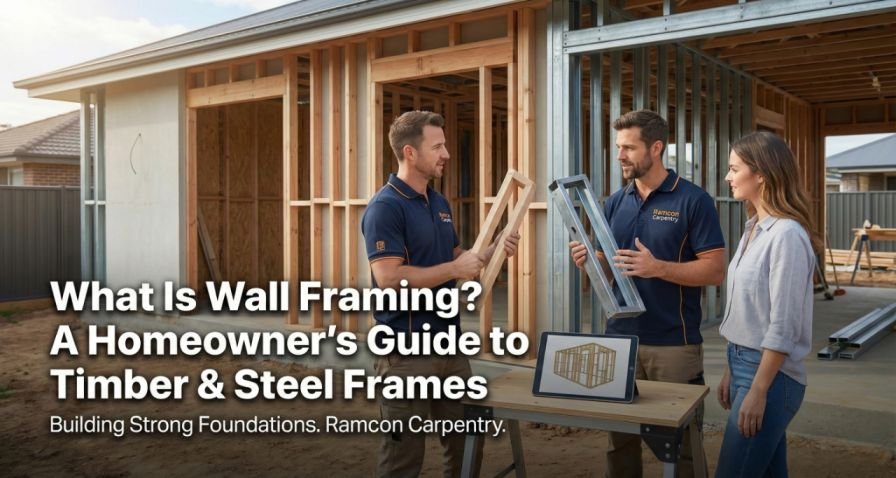
Wall framing is one of the most misunderstood parts of home construction. But do you know this misunderstanding can lead to costly repairs, structural issues, delays, and failed inspections? Many homeowners focus on finishes without understanding the structural system quietly holding their entire home together. So, in this guide, we’ll explain what framing is and why it underpins strength, safety, and long-term stability.
We’ll learn how this framework functions as a critical part of your home’s structural system. We also compare timber versus steel frames, helping you to choose the right option that is suitable for Australian homes.
What is wall framing in construction?
House wall framing is the structural framework of a house that forms a skeleton supporting all walls. It is built using timber or steel members connecting to create a strong wall structure. These framed walls in homes help to distribute weight evenly and resist movement over time. Also, proper wall framing gives a house its shape, strength, and long-term stability.
However, the purpose of wall framing in homes goes beyond simply dividing spaces. It supports plasterboard cladding, insulation, and fixtures throughout the building. Also, house wall framing forms both internal and external walls, creating rooms and enclosing the home. Above all, it is a critical part of the home’s structural system, ensuring safety, durability, and compliance.
Wall Framing Structure & Components
Wall Frame Components
Framing is made up of vertical studs and horizontal plates that form the main support structure. Studs carry loads while the top and bottom plates transfer forces across the wall. Noggings are fixed between studs to improve rigidity and prevent twisting. However, lintels are set above openings to support the weight above doors and windows. Bracing strengthens the wall against wind and movement. Together, these wall farming components work as one system to create a stable and load-resistant wall.
Load-Bearing vs Non-Load-Bearing Walls
Load-bearing wall framing supports the weight of the roof, upper floors, or structural beams above. These walls transfer loads safely down to foundations and must never be altered without engineering approval. Conversely, non-load-bearing walls do not carry structural loads and mainly divide internal spaces. You can often identify load-bearing walls by their position alignment with the roof structure or continuous support below. Also, a professional assessment is always recommended before making changes.
Wall Framing Materials
Timber Wall Framing
Timber wall framing in Australia typically uses a treated pine structure or hardwood rated for residential construction. Treated pine is lightweight, readily available, and easy to cut and fix on-site. Timber also allows quicker adjustments during construction, especially in renovations or extensions. It performs well for standard residential wall framing in Australia, where flexibility and cost control matter the most.
Steel Wall Framing
Steel wall framing uses cold-formed, galvanized steel sections assembled into precise wall systems. These frames are dimensionally stable and unaffected by termites, rot, or moisture. Steel also performs reliably in Australian conditions, particularly in coastal, bushfire-prone, or high-humidity areas. It is often preferred for multi-story homes to be projects recording strict tolerances.
Timber vs Steel Wall Framing
Steel framing differs in cost, durability, and long-term performance under Australian conditions.
- Cost comparison: Timber generally has a lower upfront material and labor cost. On the other hand, steel can cost more initially but reduce future repair risks.
- Durability and Maintenance: Steel requires minimal maintenance and resists pests, while timber needs protection from moisture and termites.
Wall Framing Methods & Construction Process
Wall Framing Construction Stages
Construction has the following stages.
- Framing stage of home construction: Wall framing for houses begins on the foundations, and floor systems are accurately set. At this stage, walls are erected to define the building’s layout and provide structural support. Precise measurements and quality materials are also crucial to prevent misalignment and ensure stability.
- Wall framing before plastering: All structural walls are completed before insulation, plasterboard, and internal finishes are installed. This ensures the walls are stable and ready to support cladding fixtures and finishing materials without risk of movement.
- Sequencing with other trades: Proper coordination with electricians, plumbers, and HVAC installers is essential. Framing must have clear parts for services to avoid rework and ensure smooth construction progress.
Wall Framing Process Step-by-Step
Here are the main steps of the wall framing process.
- Measuring and layout: Wall positions are carefully marked according to approved plans to guarantee accurate room dimensions. This step also identifies locations for doors, windows, and load-bearing elements.
- Assembly and installation: Studs, plates, noggings, and lintels are cut, assembled, and fixed to create a strong wall structure. Each component is checked for alignment, level, and plumb to maintain structural integrity.
- Compliance checks: Framing is also inspected to ensure spacing, bracing, and fixing comply with Australian building standards. This step confirms the wall can safely support loads and pass regulatory inspection before finishing work begins.
Types of Wall Framing in Residential Homes
Internal Wall Framing
Internal wall framing is primarily used to define room layout and separate living spaces within a house. These walls are non-load-bearing, which means they do not support the weight of floors or roofs above. Despite not being structural, internal walls must still be properly framed to support plasterboard insulation and fixtures. Also, accurate alignment ensures door windows and fittings are installed without issues. In addition, proper internal framing allows for future modifications during renovations or extensions without compromising the home’s stability.
External Wall Framing
External wall framing provides both the structural support and weather resistance for the home. These walls are designed to carry loads from the roof and upper floors while protecting interiors from wind, rain, and temperature changes. Moreover, insulation, cladding, and moisture barriers are integrated into the framing to improve energy efficiency and comfort. Overall, strong external framing is essential for Australian conditions, especially in coastal and bushfire-prone areas where durability and long-term stability are critical.
House Wall Framing Applications
House framing forms the backbone of residential homes across Australia, creating a reliable framework for both internal and external walls. It supports structural loads, partitions, and finishes while defining the home’s overall layout. Residential wall framing standards vary slightly between states, but timber and steel framing remain the most common materials nationwide. Also, correctly installed wall framing ensures homes are safe, compliant, and durable for Australian living conditions.
Wall Framing for Renovations & Extensions
Wall Framing for Renovations
Framing in renovations involves modifying existing walls without compromising structural integrity. Moving walls or creating openings, especially in load-bearing walls, requires careful planning and temporary support. Professional assessment also ensures changes meet Australian building codes. Properly execute renovations in roof functionality while keeping the home safe and stable.
Wall Framing for Extensions
Framing for extension must integrate new walls in the existing structure for seamless strength. Builders must carefully manage alignment, stud spacing, and load paths, and they often need structural approval. Additionally, correctly installed extensions maintain stability, support finishes, and comply with building regulations.
Australian Wall Framing Standards & Compliance
Australian Building Code Wall Framing
Wall framing in Australia must comply with the National Construction Code (NCC) and relevant Australian standards. Both timber and steel framing have specific requirements for spacing, bracing, and fixing to ensure structural safety. Compliance also ensures that walls can support load resistance, environmental stresses, and fire, and durability standards. However, builders and carpenters must follow these rules to pass inspections and guarantee long-term stability in residential construction.
Wall Framing in Australia (Sydney / NSW)
Wall framing in Sydney and NSW is also subject to local council regulations, which mainly include specific wind, bushfire, or seismic requirements. Local experience is important because framers must navigate these rules while adapting designs to site conditions. Overall, experienced carpenters ensure that framing not only meets the national standard but also aligns with local approvals, avoiding delays or costly changes during construction.
Wall Framing Costs in Sydney & NSW
Cost of Wall Framing
In Sydney and NSW, all framing costs can vary based on size, material, and complexity of the job. Timber wall framing typically ranges roughly from $1200 to $1500 per square meter of framed wall area, including materials and basic labor. On the other hand, steel wall framing is usually a bit higher, roughly $1300 to $2000 per square meter, due to specialized materials and installation requirements.
The following are the factors that affect pricing.
- Material choice: Timber is generally cheaper upfront than steel, but steel can offer long-term savings due to low maintenance.
- Labor rates: Skilled carpenters in high-demand areas like Sydney can charge more due to labor shortages.
- Site accessibility: Tight or difficult access sites can increase time and labor costs.
- Wall complexity: Curved walls, many openings, or complex architectural details raise framing costs.
- Council requirements: Additional compliance or bushfire/Wind category specifics can add engineering and material costs.
- Scale of project: Larger projects may get bulk material discounts but require more labor hours and supervision.
Residential Wall Framing Cost Breakdown
- Materials: Timber framing materials often sit around $1,200–$1,500/m², while steel can be $1,300–$2,000/m² depending on gauge, supply, and coatings.
- Labor: Skilled framing carpenter for installation, which may reflect local Sydney rates and complexity.
- New Builds: Framing for a new home construction is usually planned from the start, making the process more efficient. So, builders include the framing cost as part of the base contract and benefit from economies of scale. The range falls between $1200 and $1800 per square meter.
- Renovations: Changes or additions in existing homes cost more per square meter because of demolition, access limitations, or unexpected structural issues before new framing can be installed. So, the expected range is $1600-$2400 per square meter.
Common Wall Framing Mistakes
Structural & Compliance Errors
Many wall framing mistakes arise from incorrect stud spacing, which weakens the structure and affects load distribution. Poor old bearing support can compromise rows or upper floors, creating safety risks. Non-compliance with building codes can lead to field inspections, costly rework, and potential legal issues. These errors also often occur when builders rush the framing stage or lack experience, highlighting the importance of precision and adherence to Australian wall framing standards.
DIY vs Professional Wall Framing
Attempting DIY wall framing carries significant risks, especially when handling load-bearing walls or complex designs. Improperly framed walls can lead to long-term structural issues, including sagging, cracking, or failure under load. Professional wall frames also ensure correct spacing, bracing, and compliance with building codes. So, hiring experts reduces safety risk, prevents costly mistakes, and guarantees a durable and stable structure for years to come.
Signs Your Wall Framing Needs Repair
Framing can deteriorate over time due to structural stress, moisture, or pests. Identifying early warning signs is critical to prevent major damage and maintain home safety.
Cracks, sagging, or movement
Visible cracks in walls or ceilings, sagging sections, or walls that appear out of plumb indicate possible framing issues. These symptoms often result from shifting loads, weakened studs, or settling foundations. Also, prompt inspection by a professional can determine if reinforcement or replacement is needed to prevent further structural damage.
Moisture damage and rot
Excess moisture can cause timber studs to swell, warp, or rot, weakening the wall’s structural integrity. Water leaks, damp patches, or musty smells are common warning signs. Addressing moisture problems and replacing affected framing members is also essential to maintaining a safe and stable structure.
Termite or corrosion issues
Termites can eat through timber framing, while steel frames may suffer from rust or corrosion if exposed to moisture. Infestations or visible damage reduce load-bearing capacity and can lead to collapse. Regular inspections and timely treatment for repair are necessary to protect the home and ensure compliance with safety standards.
Choosing a Professional Wall Framing Carpenter
Why Hire a Local Wall Framing Carpenter?
Hiring a local wall framing carpenter ensures your project meets Australian building standards and regulations. Local professionals have extensive experience with residential wall framing in Sydney. They also understand the right conditions, local council requirements, and climate considerations. However, their expertise is to reduce errors, ensure structural safety, and provide efficient, high-quality installation tailored to your home’s specific needs.
Professional Wall Framing Services in Sydney – Ramcon Carpentry
Ramcon Carpentry delivers expert wall framing services across Sydney, combining precision, durability, and compliance. Our team handles every aspect of timber and steel framing, ensuring your home structure is strong, plumb, and ready for all finishes.
Our wall framing services include:
- Timber and steel wall framing
- Internal and external wall framing
- Load-bearing and non-load-bearing frames
- Framing for renovations, extensions, and new builds
- Custom design and planning
- Consultation, site inspection, and compliance checks
Frequently Asked Questions
Q1: What is the standard for framing a wall in Australia?
Residential wall framing in Australia must comply with the NCC and relevant Australian standards. It includes correct stud spacing, bracing, and fixing for timber or steel.
Q2: How to estimate framing costs?
Framing costs are estimated based on material type (timber or steel), wall area, labor rates, and project complexity. Also, obtaining multiple quotes from local framers helps to provide an accurate budget.
Q3: What are the steps of framing?
Wall framing for houses begins with measuring the layout, followed by assembling studs, plates, noggings, and lintels, then installing the wall plumb and square. Finally, compliance checks ensure spacing, bracing, and fixings meet building standards.
Q4: Do I need permission for a stud wall?
Permission depends on whether the stud wall is structural, affects the load-bearing elements, or alters the home’s layout. Non-load-bearing internal walls in some renovations may not require council approval, but it’s best to check local regulations.
Conclusion
Lastly, framing is a crucial part of home structure, providing strength and stability to walls and support for both internal and external walls. Timber and steel framing each offer distinct benefits. Timber is cost-effective and versatile, while steel provides durability and precision. Also, professional carpenters ensure correct installation, compliance with Australian standards, and long-term safety. Whether building, renovating, or extending, proper wall framing is essential for a strong and reliable home.