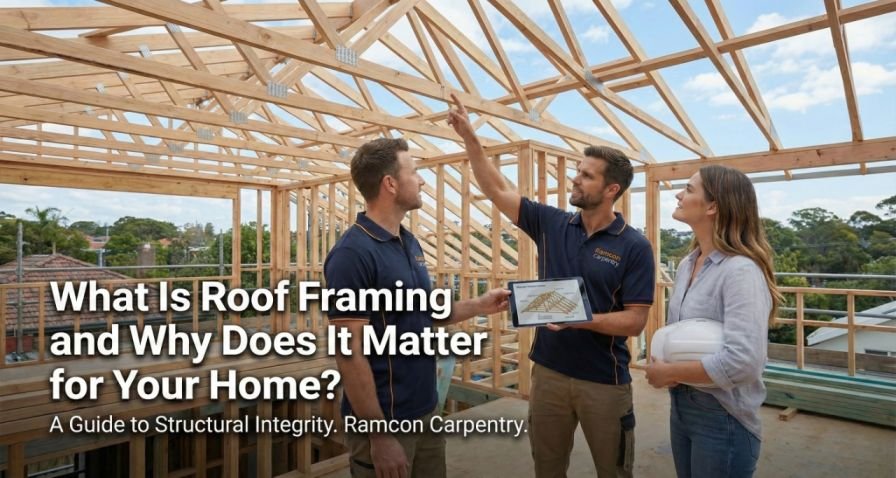
Worried about the sagging roofs, cracked ceilings, or outdated framing hidden above the ceiling? Improper roof framing is often the silent cause behind many structural issues you have to face as a Sydney homeowner. When framing isn’t designed for local weather conditions or built to Australian standards, problems can surface years later. However, by understanding how roof framing in Australia works and why it’s so critical, you can effectively protect your home’s structure.
It also helps you avoid costly surprises and make smarter decisions for renovation extensions or new builds. So, this guide breaks it all down to give you a clear path to a stronger home structure.
What Is Roof Framing in Construction?
Roof framing in Sydney is the structural framework that supports the roof and gives your home its shape, strength, and stability. It works by transferring roof load, such as weight from roofing materials, wind, and rain, down through the walls and into the foundations. It ensures the entire structure remains balanced and secure in all weather conditions. So, as a critical stage of home construction, house roof framing must be designed and installed with precision. Because any mistakes can affect long-term safety and performance.
Roof Framing Components and Structure
The following are the components of residential roof framing in NSW.
- Trusses: Pre-engineered triangular frameworks that support the building and evenly transfer the roof load to walls and foundations.
- Rafters: Sloped structural members that run from the ridge to walls, supporting the roof covering and transferring loads downward.
- Ridge Beam: The main horizontal beam at the peak of the roof that supports rafters and helps to carry structural loads.
- Wall Plates: Horizontal timber or steel members fixed to the top of walls that provide secure ways for rafters or trusses.
- Ceiling Joists: Horizontal members that connect opposing walls, supporting the ceiling and preventing the roof from spreading.
- Battens: Thin strips fixed over rafters or trusses that provide a fixing point for roof tiles or metal sheets.
- Bracing: Diagonal supports that strengthen the frame and improve resistance to wind and lateral movement.
Preparation before roofing installation
Before installing roof materials, builders must carefully check the roof for alignment, structural integration, and compliance with building standards. Proper spacing, secure fixing, and accurate levels ensure the frame can support roofing loads and withstand weather exposure. This preparation stage of roof framing is also essential for achieving a stable and long-lasting roof system.
Types of Roof Framing Systems
Traditional Roof Framing
Traditional roof framing is built on-site using individual rafters and beams cut to size. This method allows more flexibility in roof shape and is often used in custom homes or renovations where existing structures must be matched. It also makes future attic conversions or design changes easier, but it requires skilled workmanship and precise measurements to ensure long-term strength.
Roof Truss Framing
Roof truss framing uses factory-made trusses that arrive ready to install. These trusses are designed to handle loads efficiently and are installed quickly, reducing build time and labor cost. This system is also popular in modern residential builds because it offers consistent quality and reliable structural performance with minimal on-site adjustments.
Pitched Roof Framing
Pitched roof framing for houses is designed with sloping angles that help water drain quickly during heavy rain. This makes it well-suited to Australian weather conditions. The design also improves airflow in the roof space and reduces moisture buildup, helping the roof last longer and perform better over time.
Materials Used in Roof Framing
Timber Roof Framing
Timber framing is widely used in residential homes because it’s easy to work with and adapts well to different designs. It allows on-site adjustment, which is helpful during renovations or extensions. Timber also handles movement in a house naturally, reducing stress on the structure when temperature changes. However, when properly treated, it performs reliably in long-term residential construction.
Steel Roof Framing
Steel framing offers strong and precise alternatives, especially for modern homes. It is manufactured to exact measurements, which reduces errors during installation. Steel also does not warp, shrink, or attract termites, making it a dependable choice for long-term durability. Additionally, its lightweight nature puts less load on walls and foundations, improving overall structural balance.
Roof Framing Construction for Different Projects
Roof Framing for New Builds
Framing for new builds starts with a clean slate. The frame is designed alongside the home layout, allowing accurate load planning from day one. This helps avoid future structural changes and keeps construction moving smoothly. So, a well-planned frame also supports better insulation and roofing performance over time.
Roof Framing for Renovations
Renovation projects involve working around existing structures. Roof framing must connect smoothly with older framing without weakening the home. Additionally, careful assessment is needed to manage load changes caused by layout updates or roof replacements. Precision also matters, as small mistakes can affect the entire structure.
Roof Framing for Extensions
Framing for extensions focuses on the balance between old and new sections of the home. The new frame must carry additional loads without stressing existing walls or foundations. Matching roof lines and slopes is also critical for weather protection. Overall, proper framing ensures the extension feels integrated, not added on.
Why Roof Framing Matters for Your Home?
Ensures roof stability and longevity
Good roof framing for houses keeps the entire roof structure stable under everyday use in extreme conditions. The frame carries the weight of roofing materials and weather forces, spreading these loads evenly so no single part of your home is under too much stress. So, this reduces the chances of sagging, cracks, or structural failure down the track. Proper framing also supports the precise installation of installation and roofing materials, helping your roof last longer with fewer issues.
Weather resistance and load distribution
In Sydney and across Australia, the weather can change quickly from heavy rain to coastal winds. A well-built roof frame transfers wind and rain loads safely down to the walls and foundations, protecting your home from storms and uplift forces. However, poor load transfer or weak framing can mean leaks, loose tiles, or damaged roofing elements after heavy weather events.
Designed for Australian climate conditions
Roof framing for houses must be tailored for local climate challenges like strong winds, heat, and salt-laden coastal air. Engineers build frames for Australian conditions to resist these pressures and meet strict building codes, ensuring your roof performs well for years to come. So, this means fewer repairs, less structural movement, and also better protection against common issues like warping or water ingress.
Improve energy efficiency and comfort.
A well-designed roof helps create space for insulation and ventilation, which keeps your home cooler in summer and warmer in winter. This not only boosts comfort but can also lower energy bills. Thoughtful framing can reduce thermal bridging, where heat escapes through framing members, making it more energy efficient overall.
Support safety and compliance.
Roof frames are not just about strength. It meets national and local building standards to ensure safety. Frames that comply with Australian codes reduce the risk of structural problems and help avoid costly fixes or compliance disputes. Also, properly inspected and compliant framing gives you peace of mind that your home is safe and built to last.
Australian Roof Framing Standards and Compliance
Australian framing standards cover everything from how big framing members must be to how they’re fixed together. For timber frames, AS 1684 is the main reference that aligns with NCC performance requirements and ensures your home frame is safe for local wind and load conditions. On the other hand, steel framing has its own benchmarks too, like AS/NZS 4600 for cold-formed steel and related standards that govern design, strength, and corrosion protection.
Together, these standards ensure every roof frame is strong, consistent, and long-lasting. Moreover, experienced roof framing contractors apply these standards to protect your investment, ensure compliance, and avoid costly fixes later.
Roof Framing Installation and Cost
Framing is a major part of your build or reroof project and has a real impact on long-term performance and budget. Proper roof framing installation involves accurate planning, correct placement of trusses and rafters, and secure fixings that handle local wind, rain, and structural loads. So, getting this stage right helps your roofs sit flat, shed water correctly, and avoid costly fixes later. Experienced roof framing carpenters in Sydney also ensure the frame lines up with insulation, ventilation, and roofing materials for a smoother overall build.
When planning your budget, roof framing costs in Sydney can vary widely depending on roof size, shape complexity, and materials chosen. Typical residential work includes framing materials and never falls in the range of about $250 to $600 per square meter. However, with complex designs of premium materials like steel or hardwood, the range goes up to $20,000 to $60,000. So, getting detailed quotes from a professional roof framing service in Sydney helps you understand exactly what’s included. Such as council compliance, safety measures, and warranty, so you can compare fairly before starting work.
Ramcon Carpentry—Trusted Roof Framing Experts
At Ramcon Carpentry, we provide local roof framing service, delivering strong and durable frames for gable, hip, and flat roofs. Our skilled residential roof framing carpenters specialize in Australian standard roof framing, building timber structures designed to support roofing insulation and withstand severe weather.
We also combine precision experience and compliance with Australian building codes to ensure your home is safe, energy efficient, and ready for insulation, electrical, and plumbing work. However, with our transparent quotes and flexible design options, we make every roof framing project reliable and hassle-free.
Frequently Asked Questions
Q1: What is the difference between framing and general carpentry?
House roof framing focuses on building the structural skeleton of a home, while general carpentry covers finishing work like cabinets, doors, and trim.
Q2: What is the most popular framing method?
Roof truss framing is the most popular training method due to its efficiency, strength, and speed of installation.
Q3: How many types of frame structures are available?
There are three main types of roof framing structures available.
- Traditional framing: on-site rafters and beams, offering flexible design.
- Truss framing: Pre-made triangular frames that are quick and strong.
- Pitched roof frames: Sloped frame for drainage and weather protection.
Q4: Which framing type do homebuilders most commonly use in housing?
Truss roof framing for houses is the most commonly used in modern residential homes.
Conclusion
Above all, roof framing in Sydney is the backbone of any home, providing stability, weather resistance, and long-term durability. Choosing the right materials, framing system, and professional installation ensures your roof can withstand Sydney’s weather and comply with Australian standards. Whether you’re building, renovating, or extending, careful planning and skilled workmanship also prevent costly problems and protect your investment. For reliable results and expert guidance, trusting Ramcon Carpentry’s roof framing services is the key to a safe and long-lasting home.