
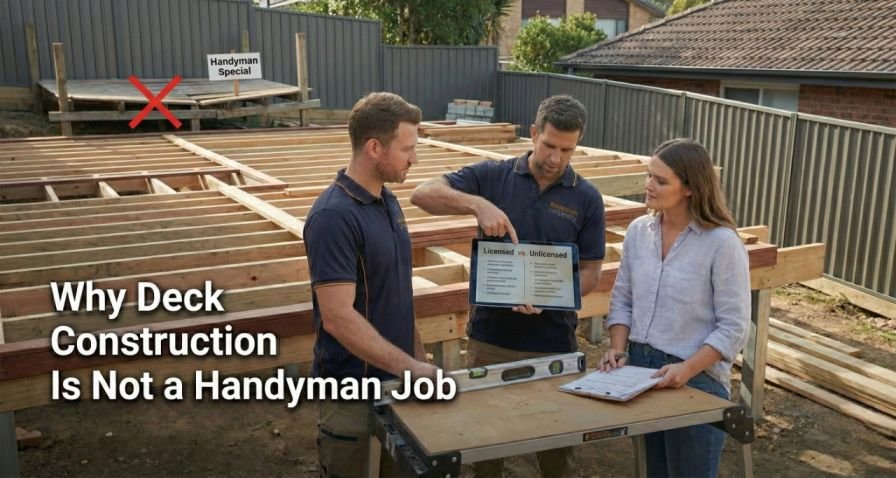
Deck construction often looks simple, right? Especially when a handyman’s quick fix offers promise for results and low cost. Many Sydney homeowners assume building a deck is basic carpentry, not a structural project that needs real expertise. And that belief leads to costly mistakes, safety risks, and failed inspections.
Footings, spacing, drainage, and timber movement all work together, and ignoring them weakens the entire structure of your deck. So, in this guide, you’ll see why deck construction isn’t a handyman’s job and understand the importance of hiring licensed professionals to protect your home, budget, and long-term safety.
What Deck Construction Really Involves
Structural deck construction basics
- Deck framing and footings
Framing carries the full weight of the deck and everything placed on it. Footings must be set to the correct depth and spacing to prevent movement and collapse over time.
- Deck structure and supports
Posts, bearers, and joists must work together as one system. Poor alignment or weak connections reduce strength and create long-term safety risks.
- Load-bearing structures and footings
The deck must support people, furniture, and environmental loads. Incorrect load calculations lead to sagging, cracking, or sudden structure failure.
- Ground conditions and soil stability
Soil type affects how footings perform under pressure. Ignoring ground conditions leads to shifting and uneven settlement.
The Full Deck Construction Process
- Planning and design
Deck layout must match site conditions, intended use, and council rules. Poor planning causes redesigns, delays, and added cost.
- Material selection
Timber choice affects strength, lifespan, and maintenance needs. Outdoor exposure accelerates the failure of the wrong timber.
- Structural construction
Footings, framing, and support must follow precise measurements. As even small errors multiply across the structure.
- Fixing, spacing, and finishing
Correct fixing methods allowed the timber to expand and drain water properly. Tight spacing and moisture accelerate decay.
- Inspection and compliance check
Professional inspections confirm safety and deck construction compliance. However, skipping this step risks fines and future removal orders.
Professional Deck Construction vs Handyman Work
When comparing deck construction vs handyman work, many homeowners underestimate the gap between their work. A handyman may handle small repairs, but deck building involves structural design, load calculations, and strict building rules. General skills do not cover footing depth, timber movement, or drainage planning. Moreover, experience alone does not replace formal training. Without the right knowledge, small mistakes turn into safety risks that appear months or years later.
Conversely, professional builders train specifically for structural work and outdoor conditions. They follow approved methods, use tested fixing systems, and stay accountable for the final result. Licensed professionals also carry responsibility for structural safety and long-term durability. However, if problems appear, there is a clear path for inspection and correction, not guesswork or blame shifting.
Licensed deck builder responsibilities
Licensed deck builders take full responsibility for compliance inspections, council approvals, and certifications throughout the project. They ensure the deck meets structural standards, safety rules, and approved building methods. When issues arise, liability sits with the builder, not the homeowner. So, this accountability protects you from fines, failed inspections, and forced rebuilds. Licensed professionals also document the work properly, making future inspections, property sales, and insurance claims far easier to manage.
Common Deck Construction Mistakes Made by Handymen
Here are the common deck construction mistakes your handymen can make due to a lack of professional training.
Structural and safety errors
Handymen often use incorrect spacing and fixing methods that restrict timber movement. Screws placed too close or in the wrong position weaken connections and allow boards to split. These small errors reduce load capacity and increase the risk of structural failure, especially when the deck carries heavy furniture or groups of people.
Materials and environment mistakes
Ignoring waterproofing and drainage requirements traps moisture within the structure. Water exposure accelerates rot, corrodes fixings, and shortens the deck’s lifespan. Weather exposure and timber movement then magnify the damage, causing boards to cup, twist, or loosen over time.
Incorrect footing depth and placement
Shallow or poorly placed putting fails to anchor the deck securely. Ground movement and moisture changes shift the structure and create uneven surfaces. This mistake often leads to sinking posts and unstable handrails.
Poor timber selection for outdoor use
Using untreated or unsuitable timber for outdoor conditions causes early deterioration. Sun, rain, and humidity break down the timber faster than expected. So, this leads to splintering, discoloration, and loss of structural strength.
Skipping compliance and inspection steps
Handymen often bypass inspections to save time or cost. But this exposes you to failed approvals, fines, and forced alterations. Problems only surface when councils, insurers, or buyers review the work.
Timber Choices and Outdoor Performance
Timber for outdoor decking
Choosing the right timber is critical for outdoor decking in Australia. Different species handle sun, rain, and humidity in unique ways, and the wrong timber can warp, crack, or rot quickly. Decks in coastal or high-rain areas face extra challenges, making durability treatment and maintenance key factors for long-term performance.
Timber deck construction details
Proper timber professional deck construction requires precise timber flooring installation standards. Boards must be spaced correctly, fixed with suitable fasteners, and allowed to expand or contract naturally. Following these standards prevents structural weakness, uneven surfaces, and premature deterioration, ensuring the deck remains safe and strong for years.
Board orientation and layout: Direction and pattern affect drainage load reservation in visual appeal. So, proper alignment is important to prevent water pooling and uneven wear.
Fastener type and placement: Use corrosion-resistant screws or hidden fasteners suitable for outdoor timber. Incorrect placement can split boards and reduce deck strength.
Expansion gaps: Allow gaps between boards for timber movement due to humidity and temperature changes. Too small gaps trap water and cause warping, while too large gaps create uneven surfaces.
Support spacing: Joists and bearers must be spaced according to timber size and load expectations. Incorrect spacing also leads to sagging or bouncing underweight.
Surface treatment and maintenance: Applying stains, sealants, or oils protects timber from UV, moisture, and fungal decay. Regular maintenance also prolongs the deck’s life and appearance.
Drainage and ventilation: Ensure airflow under the deck to prevent moisture buildup. Standing water accelerates rot and weakens structural components.
Deck Construction Safety and Long-Term Durability
Construction of the deck starts with safety standards, including NSW building regulations. Every post, joist, and footing must handle expected loads to protect your family. Poor construction may seem cheaper at first, but hidden errors like weak fixings or incorrect spacing cause repairs and early timber replacement. A deck that builds correctly from the start avoids accidents, council fines, and extra costs. Also, choosing professional deck builders ensures proper materials and methods to make your deck safe, strong, and durable for years.
Deck Construction Cost In Sydney
In Sydney, the average outdoor deck construction ranges from $3,500 for a small timber deck to over $15,000 for larger, high-quality designs with structural footings and professional finishes. Prices vary based on timber type, deck size, complexity, and compliance with Australian building codes. However, many homeowners underestimate costs when handymen offer low quotes, only to face repairs or replacements later due to shortcuts or non-compliance.
But professional decking services protect your investment by ensuring the deck is built safely, meets all NSW regulations, and uses the right materials. Professionals handle planning, permits, and deck construction inspections, reducing the risk of hidden problems that lead to extra expenses. Also, a properly constructed deck lasts longer, maintains its appearance, and avoids costly structural failures, giving you peace of mind and value for money.
Factors Affecting Deck Construction Cost
- Timber type
Different species vary in price, durability, and maintenance needs.
- Deck size
Larger decks require more materials, labor, and structural support.
- Design Complexity
Multi-level decks, curved edges, or built-in features increase labor and materials.
- Footings and structural supports
Deeper or reinforced footings add to the cost but ensure long-term safety.
- Council approvals
Compliance with NSW regulations and local deck construction standards may involve fees and inspections.
- Site conditions
Uneven or sloped land can require extra excavation, leveling, or returning work.
Ramcon Carpentry – Trusted Local Licensed Deck Builder in Sydney
Ramcon Carpentry is delivering high-quality and reliable deck construction in Sydney. Our team follows Australian deck construction codes closely, ensuring every project meets safety standards and passes inspections. We also understand the local climate and councils, so each deck is designed to withstand sun, rain, and humidity while complying with NSW building regulations.
As trusted Sydney deck builders, we provide a clear deck building process from planning to completion. We also manage approval council certificate inspections while keeping you informed at every stage. By avoiding common risks like timber warping, drainage problems, or unstable footings, we ensure a safe, durable, and low-maintenance deck that protects your investment and adds long-term value to your home.
Frequently Asked Questions
What is the cheapest material to build a deck with?
Softwood timber, like treated pine, is the most cost-effective choice for decks. It is widely available, easy to work with, and quick to install, keeping labor costs low. However, untreated or low-quality softwood can rot or warp quickly, so proper treatment and regular maintenance are essential to ensure safety, durability, and long-term value.
Does the decking need high maintenance?
Yes, timber decking requires regular upkeep to remain safe and attractive. Key maintenance tasks include:
- Cleaning debris and dirt to prevent mold or rot.
- Reapply stains, sealants, and oils every 1 to 2 years.
- Checking boards, fixings, and joists for damage.
Remember, low-maintenance composites reduce effort but increase the initial cost.
What is the lifespan of a deck?
A well-constructed and maintained timber usually lasts 15 to 25 years. Hardwood composite decks can exceed 30 years. Lifespan depends on environmental exposure, timber type, and maintenance. But neglecting repairs, poor damage, or using low-quality materials can lead to significantly reduced durability, leading to structural problems and earlier replacement.
How often should a deck be repaired?
Residential deck construction should be repaired as soon as damage or safety risks appear. Loose boards, rusted fasteners, sagging joists, or water damage require attention. Minor repairs may be necessary every 1 to 3 years, while larger structural work could be necessary after 10-15 years. But regular inspections prevent accidents, extend deck life, and reduce costly replacements.
Conclusion
Overall, professional deck construction is not a handyman job, as it leads to safety risks, costly repairs, and failed inspections. Choosing a licensed deck builder ensures proper planning, materials, and compliance with all regulations. Professionals also handle every step from structural support to finishes, protecting your investment. For Sydney homeowners, building it right the first time with expert guidance guarantees a safe, durable, and long-term outdoor space, making deck construction a secure and smart decision.